


Types of Customer Feedback Survey Panels (And Why Joining One Could Be Worth Your Time)
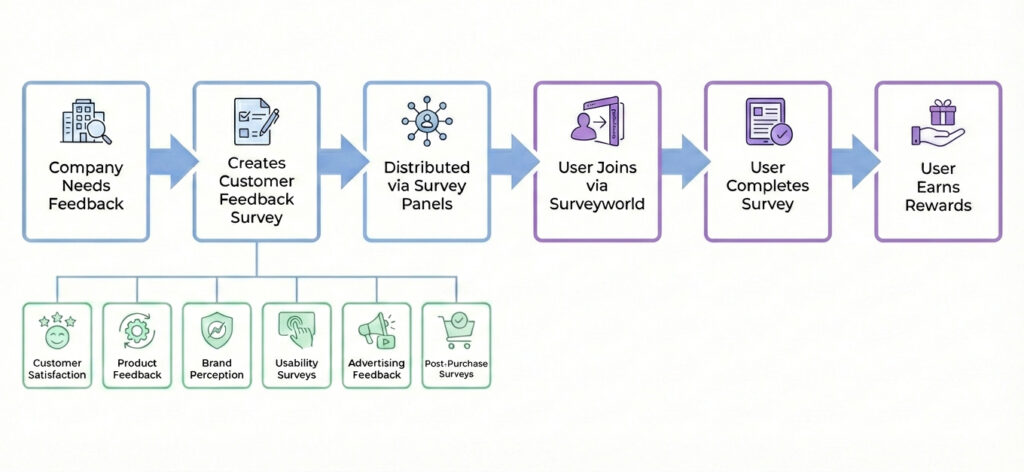
Survey panels have a reputation problem, and most of it isn’t deserved.
The mental image most people have is either (a) something boring and corporate where you click through twenty questions about toilet paper and earn fifty cents, or (b) something vaguely scammy that promises passive income and eventually asks for your bank details. I get why that image exists. There’s been a lot of junk in this space.
But what’s underneath all that, when you actually look at how legitimate market research works, is kind of interesting. Companies spend serious money on this. Not “post a survey on social media and hope for the best” money. Real, structured research, targeting specific demographics, trying to understand things that actually matter to their business. And they need regular people to participate.
That’s what survey panels are for. Joining one (or several) is a reasonable way to be part of that and get paid for the time.
What a Survey Panel Actually Is
Short version: a survey panel is an opt-in community. You sign up, tell them a bit about yourself, and from that point you’re in the pool for studies that match your profile.
The thing people don’t always get is that these aren’t mass-audience surveys. They’re targeted. A researcher isn’t looking for “anyone with opinions”; they’re looking for, say, people between 35 and 55 who own a dog and have bought pet insurance in the last two years. Or people who switched mobile providers recently. The panel’s job is to have a database detailed enough to actually find those people when a study needs them.
Which is why filling in your survey panel profile matters more than most people realize. A vague profile gets you fewer invitations and worse-matched ones. A detailed one gets you matched to studies that actually fit who you are.
I should also mention: Surveyworld isn’t a survey panel itself. We don’t run studies. What we do is make it easier to find and join survey panels that do, without having to track them down one by one and go through separate registration flows for each.
The Kinds of Surveys You’ll Come Across
Six types of survey panel, roughly. More different from each other than the word ‘survey’ suggests.
- Customer satisfaction surveys. These are short, usually triggered by a recent purchase or interaction. Rate your experience. Would you recommend it? Done. Not the most exciting thing in the world, but companies track these closely. A score that quietly drops across thousands of responses usually means something is going wrong before anyone inside the company has noticed.
- Product feedback surveys. More involved than a satisfaction rating. Does the packaging make sense? Was the app update actually an improvement, or just a change for its own sake? Does the price feel right? Vague ‘it was fine’ answers don’t help much here. This is where having genuine opinions, positive or not, makes you a more useful respondent.
- Brand perception surveys. You don’t have to have bought from a brand to qualify for these. They’re asking about reputation, trust, and gut associations. Does this company feel trustworthy or a bit corporate? Premium or overpriced? Honestly, these are where company pride takes the most hits. What feels polished from the inside often reads as cold from the outside. What the marketing team calls ‘premium positioning’ consumers sometimes just call expensive. There’s almost always a gap between how a brand sees itself and how people actually see it, and these surveys exist to measure it.
- Usability surveys (websites and apps). Designers are genuinely terrible at testing their own products. They already know where everything lives. You don’t. If you’ve ever spent two minutes hunting for a logout button that turned out to be buried three clicks deep, that frustration is exactly what they need to hear about.
- Ad and campaign feedback surveys. Before anything goes live, companies test it on real people. You watch a short clip or read some copy and give your gut reaction. Did it land, or did it just sort of wash over you? They want the unguarded response, not a considered review. Your first five seconds is usually what they’re actually after.
- Post-purchase surveys. These cover the whole transaction, not just the product. Did the checkout actually work? Did delivery match what was promised? Was the packaging reasonable, or was it three layers of plastic wrap for a single pen (genuinely one of my pet peeves)? They are short, and sent to you while you still remember what happened. Usually the easiest category to complete.
What Actually Happens When You Join
The first week after signing up tends to be quieter than people expect, which catches a few people off guard. Panels need time to match your profile against their active studies, and that’s not instant. Give it some time before drawing conclusions.
You won’t qualify for everything, either. Getting screened out after two questions is the survey equivalent of being told a restaurant is fully booked when you can clearly see empty tables. Annoying, and genuinely not personal. Studies are built for specific audiences, and sometimes you just don’t fit the slot they’re trying to fill that week.
Being on more than one survey panel helps. Volume is one reason, but panels also tend to specialize. One survey panel might run mostly consumer goods studies; another focuses on tech or healthcare. Different pools, different studies coming through.
Rewards vary by survey panel, which is actually a good thing. Some pay via PayPal; others use gift cards or a points system you build up over time. Have a look at what each one offers when you sign up. There’s something for most preferences.
Why It’s Worth Doing
The feedback you give actually gets used. Product teams read it, and design decisions get made off the back of it. Sometimes things change because of what a few hundred regular people said in a fifteen-minute survey. You won’t usually know which things. But it goes somewhere real.
You’re part of that process. And you get rewarded for your time.
Surveyworld is a good place to start if you haven’t already. We’ve done the work of finding survey panels that are actually worth joining. Browse which survey panels are available, pick a few that fit, and see what comes through.
If you’d like to learn more about Surveyworld in a different way, you can also check out our YouTube channel.

Peter Surveyworld
Peter Surveyworld is a dedicated survey and consumer insights specialist with a passion for making online research accessible to everyone. With years of experience in digital data collection, panel engagement, and global market research trends, he helps readers understand how surveys work and how companies use feedback to improve products and services.
Related articles
Survey Software for Businesses (and How You Can Benefit from It)
Learn how survey software for businesses works and how you can join survey panels through Surveyworld to take…

Best Survey Tools for Market Research (and How Surveyworld Fits In)
Looking for the best survey tools for market research? This article explains how survey platforms work and how…

How to Start Earning and Get the Most Out of Surveyworld
Learn how Surveyworld helps you join survey panels, receive survey invitations, and earn rewards by completing online surveys.


